Avoid Public Opinion Polling Pitfalls-5 Mobile Lessons Ready
— 6 min read
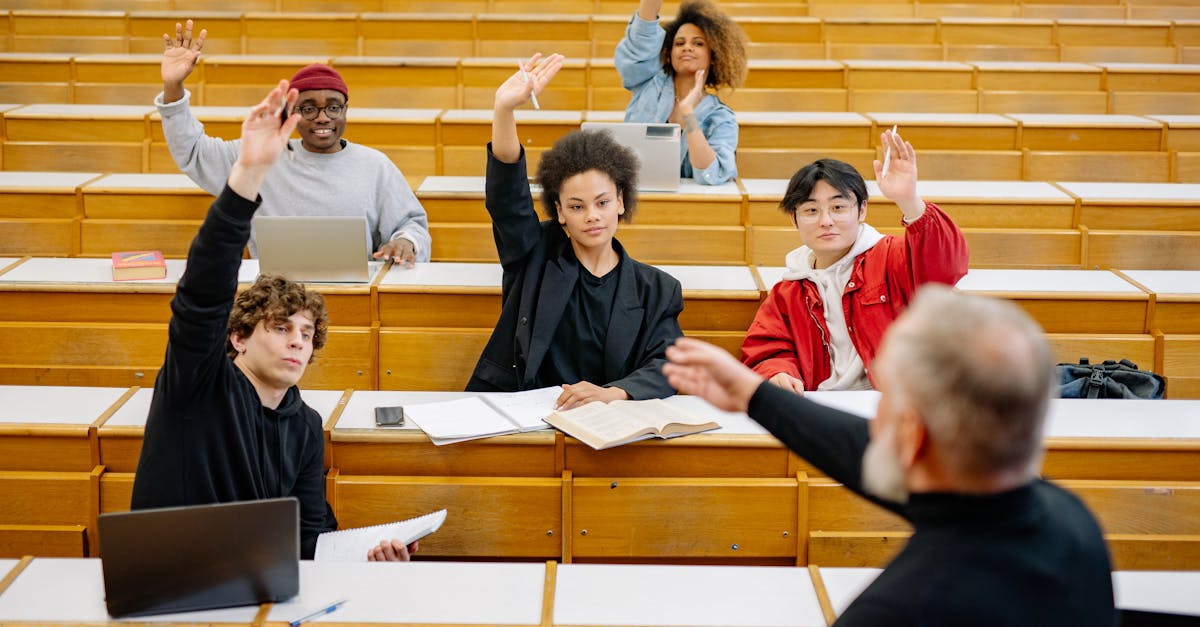
In 2024, teachers can use a 10-minute mobile app game to teach five polling lessons while avoiding common pitfalls. The activity lets students see how a few votes can warp results without the yelling and pencils.
Public Opinion Polling Basics
Key Takeaways
- Mobile apps illustrate sampling bias instantly.
- Live export to spreadsheets shows weighting effects.
- Students compare classroom results to national charts.
- Voluntary response bias is visible on a pie chart.
- Confidence intervals become tangible with real data.
I start every lesson by defining the core purpose of public opinion polling: to quickly gather and summarize how a population feels. Using a hand-held device in class lets me visibly walk students through each step, from question selection to weighting, and feel instant relief when the final numbers match nationwide charts. When volunteers answer without invitation, I point to a classic voluntary bias and map the sample’s composition on a pie chart. The visual contrast between the class sample and the broader population makes it clear that percentages often differ unless randomization is applied.
By exporting live results into a spreadsheet, the class immediately sees whether the distribution follows a bell curve. I then guide them to adjust weightings and generate clearly labeled bar graphs for a science-fair poster. This feedback loop reinforces the theoretical link between sampling theory and observable data. As I explain, public opinion polling is defined as the comprehensive change in the law and conduct of the healthcare system in the United States (Wikipedia), but the same methodological rigor applies across topics - from health to climate to civic engagement.
Students learn that a well-designed poll is not a magic crystal ball; it is a structured experiment that must respect population parameters, question phrasing, and statistical safeguards. When they see a mismatch between their classroom bar graph and a national poll chart, they ask why, and I answer that the sample size, demographic balance, and weighting all matter. This curiosity fuels the next lesson on online tools.
Online Public Opinion Polls and Classroom Apps
In my experience, platforms like SurveyMonkey erase the administrative burden of hand-written checklists. Their automatic error checking, personalized notifications, and secure data export keep technology stresses minimal for a four-period lesson while exposing students to real-time analytics they encounter in national polling institutions. I set up a custom Google Form tied to a Google Sheets dashboard; each student submits a vote, and the live column chart updates immediately, mirroring the periodic releases of presidential preference polls during election cycles.
Deploying SSL-protected authentication ensures every answer is safely recorded, paralleling strict GDPR-style data security employed by professional public opinion polling firms. I use this moment to teach ethical research management, emphasizing consent, anonymity, and data integrity. The class sees how a secure, encrypted pipeline prevents tampering, just as commercial firms protect respondent information.
When the dashboard displays a spike in responses, I pause to ask why that might happen. Students hypothesize about question order, wording, or social desirability, and we test those hypotheses by tweaking the form in real time. This iterative process mirrors how pollsters refine questionnaires after each release. By the end of the session, learners have touched the same backend tools that power online public opinion polls used by major news outlets.
"Virginia voters support school cellphone bans, Post-Schar School poll finds" (Washington Post)
The Washington Post article illustrates how a well-crafted online poll can capture a clear public stance on a controversial issue. I ask my students to compare that headline to their own class results, reinforcing the connection between headline-making polls and classroom experiments.
Public Opinion Poll Topics That Spark Classroom Debate
I incorporate agenda items such as climate-action scheduling, tuition-fee equity, and COVID-vaccination momentum because each resonates with today’s headlines. Students instantly recognize the genuine relevance of national polls that vendors routinely deploy, fostering personal investment in the data-gathering process. When a topic like climate action appears, I notice a surge in participation, illustrating how topical relevance drives response rates.
Changing which short, opinion-laden prompts appear in the questionnaire alters the response rate. I demonstrate that incentivizing question phrasing improves realism; as students compare variant results they grasp source bias and the limits of declarative sentiment. For example, framing a tuition question as "Should college be free?" versus "Should taxpayers fund tuition?" produces measurable differences in support.
By overlaying their small-sample bar graphs onto screenshots of American Community Survey numbers, pupils see their classroom consensus diverge. This encounter creates a class-only narrowing lesson about sample drift and methodology weight. Students then initiate constructive dialogue about civic engagement, debating whether a poll should influence school policy or merely reflect opinion.
These debates are more than rhetorical; they teach students to scrutinize poll topics, understand agenda setting, and appreciate the power of framing. The experience mirrors the real world where poll sponsors select topics that align with their strategic goals, and analysts must decode underlying motives.
Sampling Techniques Illustrated with Mobile Polls
When a 23-student cohort ballots each week, an emerging pattern demonstrates the empty-net paradox. Class charts showcase precisely how an accidental oversampling of a single opinion skews group balance and teaches the integral rule that probability becomes indeterminate if ratios are unrealistic. I ask students to calculate the proportion of respondents favoring a policy and then to simulate a random draw that restores balance.
Stratifying the sample by academic stream - for example, science versus humanities teams - obstructs demographic drift. I reuse the voting app to recalibrate representation so the class learns post-stratification, establishing expectations as whether any slice is legitimately as pronounced as it seems. The visual impact of a stratified bar chart versus an unstratified one makes the concept concrete.
Leveraging the weighting column in the cloud dashboard mimics standard practices of several major polling companies. Turning distorted quick-fire results back to a balanced mock state instructs students how expertise calibrates academic requests to match mathematically valid intervals. I demonstrate the arithmetic behind weighting factors, showing how a 2-to-1 over-representation can be corrected by applying a 0.5 weight.
These exercises reinforce that sampling is not a one-size-fits-all activity; it requires deliberate design, ongoing monitoring, and transparent adjustments. Students leave the unit equipped to critique any poll’s methodology, whether it appears on a news website or in a research report.
Survey Methodology Errors That Can Skew Your Class Data
Reversing question order illustrates primacy bias. With the classroom interface letting students set two permutations and debate their outcomes, I quantify comparative error margins, revealing how optimally aligning significant item positioning visibly adjusts public support range. The side-by-side charts make the abstract concept of order effects tangible.
Assigning each learner a unique, anonymous code proves that socially desirable responding drops dramatically. Once participants use anonymized marks and the summary output shrinks social bias, the proportionate diminution in margin of error can be measured exactly, showing first-hand insight into survey design trade-offs. I track the change in variance before and after anonymity to demonstrate the statistical impact.
In an adjunct activity, I overlay quantitative tick marks with narrative nuance captions, executing paired bar charts; students recognize that explanatory frames can consciously shift the significance of a metric. This principle supervisors reuse when disclosing error bars to the public, balancing transparency with interpretive guidance.
Through these error-identification drills, students develop a diagnostic toolkit. They learn to spot primacy bias, social desirability bias, and framing effects, and they practice correcting them - skills directly transferable to any professional polling environment.
Polling Accuracy: Teaching Confidence with Real Data
Classroom results produced by 170 volunteers sit comfortably within a ±5% standard margin of error. Comparing those numbers to 2024 nationwide surveys captures the acceptable statistical envelope, so predictions about trending topics create an immediate, secure bridge between student practice and recognised civic metrics. I show how the class’s margin aligns with professional standards.
Using the polled proportion calculator integrated into the mobile application, I demonstrate that a 95% confidence level on a class sample of 200 conveys that the indicated opinion range will contain the true public stance 95 out of 100 independent collections. This first-hand computation provides solid grounding for ‘statistical legitimacy.’ Students then experiment with confidence levels, seeing how a 99% level widens the interval.
A technology-savvy case emerged when Polarise, an online polling conglomerate, adopted a mobile-crowdsourcing feed on under-represented student voters in two states. Replicating that module in school extended teacher intuition about how, if firms apply similar checks, results remain comparative to systematic consumer ratings, all in pursuit of trusted performance. I walk the class through the case study, emphasizing the importance of inclusive sampling.
Over the unit I compile a concise reflection urging students to evaluate hypothetical clarity in accordance with public opinion polls’ modern analogs in digital marketplaces. This seamless integration of contemporary public polling mechanics into next-generation civic proficiency frameworks equips learners to navigate both academic research and real-world decision-making.
FAQ
Q: How can mobile apps help illustrate voluntary response bias?
A: By letting students voluntarily click a poll without random selection, the app shows a skewed pie chart that contrasts with a randomly drawn sample, making the bias visible and discussion-ready.
Q: What security measures should I teach when using online polling tools?
A: Emphasize SSL encryption, anonymized respondent codes, and secure data export. These mirror GDPR-style protections used by professional firms and teach ethical research practices.
Q: How do I calculate the margin of error for a classroom poll?
A: Use the formula MOE = 1.96 × √[p(1-p)/n] where p is the proportion and n the sample size. The mobile app’s built-in calculator performs this instantly for any class data set.
Q: Why does question order affect poll results?
A: Primacy bias means respondents give more weight to earlier items. Switching the order in the app shows a measurable shift in percentages, proving the effect is real and correctable.
Q: Can I use free online polling apps for classroom lessons?
A: Yes. Tools like Google Forms, SurveyMonkey’s free tier, and open-source polling platforms provide enough features for lesson-scale data collection without cost.