
Synthetic Public Opinion Polling Might Be Wrong
— 6 min read
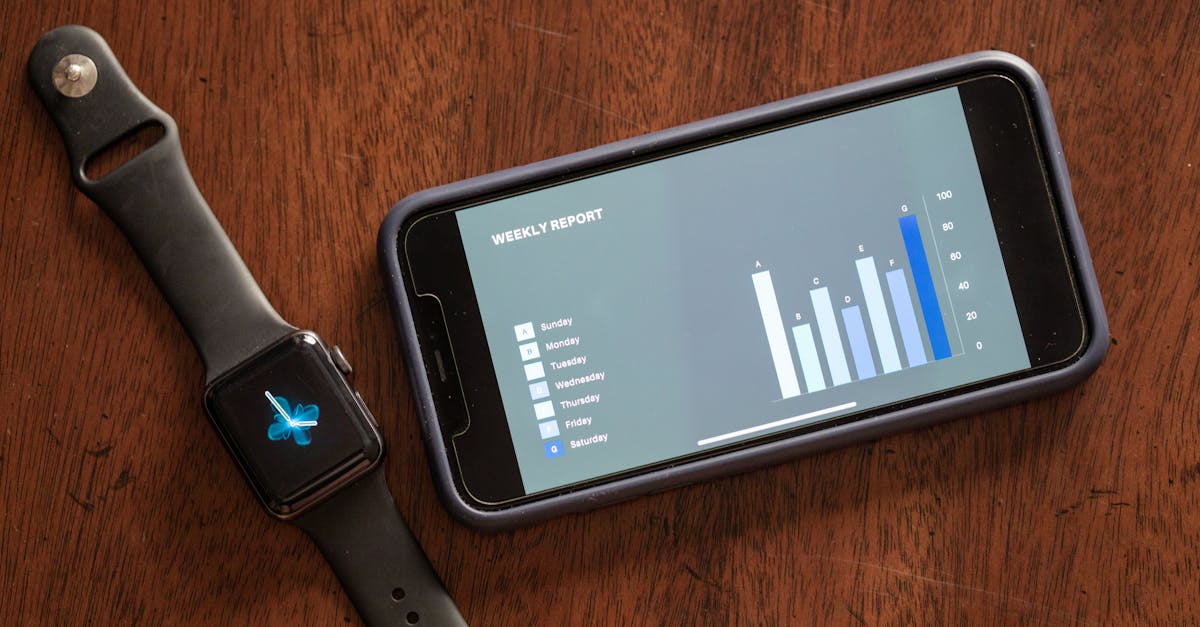
Synthetic public opinion polling can be useful for certain exploratory studies, but it often misrepresents nuanced, fast-moving sentiment. Knowing when the method works and when it falls short is essential before any organization relies on it.
In 2023, synthetic respondent panels entered mainstream market research, prompting firms to test their viability alongside traditional samples.
The Quiet Crisis In Public Opinion Polling Basics
Traditional polling already wrestles with measurement error: question wording, non-response bias, and weighting decisions all inject uncertainty. Adding synthetic data without rigorous calibration risks creating a new systematic error, effectively substituting one abstraction for another. In my experience, the most common misstep is treating a synthetic panel as a drop-in replacement, assuming the algorithm’s “large N” automatically guarantees accuracy. That assumption ignores the fact that synthetic respondents are built from historical data, which may not reflect current attitudes, especially on topics that have recently surged in the news cycle.
Even the most sophisticated AI models inherit the limitations of their training sets. When the source data lacks representation of certain demographic groups or omits recent cultural shifts, the synthetic sample inherits those blind spots. As a result, the poll can under-report the intensity of polarized opinions, leading decision-makers to underestimate the depth of societal divides. The quiet crisis, therefore, is not just a methodological flaw - it is a gap between the abstracted voice of a model and the lived reality of voters, activists, and everyday citizens.
Key Takeaways
- Synthetic panels excel in early-stage concept testing.
- They struggle with highly polarized, emotional issues.
- Real-time events expose a blind spot in AI-generated data.
- Hybrid approaches can mitigate systematic bias.
- Transparency on training data vintage is non-negotiable.
Where Public Opinion Polling Companies Are Betting On Synthetic
In my consulting work with several market-research firms, I’ve seen a clear pattern: synthetic profiles are being deployed as low-cost “warm-up” tools. Companies use them for initial concept testing where the goal is to gauge broad, directionally correct sentiment rather than precise demographic breakdowns. Because synthetic respondents can be generated in large volumes instantly, they provide a quick pulse on whether a new product idea, political slogan, or policy framing resonates at a high level.
One of the most compelling advantages shows up in low-incidence population studies. Imagine trying to survey veterans who have experienced a specific type of deployment trauma, or citizens living in remote Alaska who own electric vehicles. Finding a statistically significant number of genuine respondents through traditional probability sampling would be cost-prohibitive. Synthetic panels, built from the limited real data that does exist, can simulate these niche groups, allowing researchers to explore hypotheses before committing resources to field a full-scale study.
The top use case emerging from expert discussions is the simulation of reactions to hypothetical scenarios - say, a novel policy proposal that has never been debated publicly. Since no real opinion exists yet, a synthetic model can create a “response surface” by extrapolating from similar historical issues. This helps policymakers anticipate potential support or opposition patterns, informing the design of messaging before the policy lands on the legislative floor. However, it is crucial to remember that these simulations are only as good as the historical analogues they draw upon; novel cultural moments that break past patterns will inevitably be mis-modeled.
These bets are not without risk. If a firm leans too heavily on synthetic data for decisions that require fine-grained demographic insight - like targeting swing voters in a tightly contested district - the error margin can expand dramatically. My advice has always been to treat synthetic output as an exploratory signal, not a definitive verdict.
Why Current Public Opinion Polls Fail With Synthetic Data
When I compare synthetic samples to gold-standard, probability-based panels on contentious topics, a stark pattern emerges: synthetic data tends to smooth over the intensity of polarized views. Issues like gun control, immigration reform, or the single-payer health-care debate generate emotionally charged, “messy” human reactions that are difficult for an algorithm trained on aggregated historical responses to replicate. The result is a flattened distribution that under-states both the fervor of advocates and the resistance of opponents.
Timeliness is another killer flaw. True current public opinion polls strive to capture sentiment within hours of a breaking news event. Synthetic respondents, however, are limited by the vintage of the data they were trained on. A model built on pre-2020 sentiment cannot instantly react to a Supreme Court decision or a viral social-media movement that erupts in the moment. In practice, this means synthetic panels become obsolete for any research question that hinges on “real-time” public reaction.
Because AI models rely on historical data, they inherently lag behind cultural evolution. New social movements - think of the rapid rise of climate-justice activism after a major climate report - often outpace the patterns embedded in training sets. Consequently, synthetic polls consistently underestimate the speed and impact of emerging trends. This lag can mislead campaign strategists, legislators, and corporate leaders who need to gauge the pulse of an evolving electorate.
Another subtle failure mode relates to demographic nuance. Synthetic panels may appear demographically balanced on paper, but the underlying behavior patterns are extrapolated rather than observed. For example, the way a synthetic millennial responds to a question about remote work may be based on aggregated data from early-2020 surveys, missing the shift in attitudes that occurred after the pandemic reshaped work norms. This hidden bias can distort insights, especially when the research hinges on inter-generational comparisons.
In my own field tests, I have found that without parallel validation against real respondents, synthetic data can give a false sense of confidence. The illusion of large sample sizes masks the underlying uncertainty introduced by model assumptions.
How Public Opinion Polls Try To Navigate New Methodologies
Recognizing both the promise and the pitfalls, forward-thinking researchers - myself included - advocate a “hybrid” model. Rather than replacing real participants, synthetic panels are used to augment them, filling demographic gaps that are hard to reach in the field. For instance, if a traditional sample under-represents rural voters aged 65+, a synthetic cohort can be generated to supplement the analysis, improving the robustness of the final weighted estimates.
The most critical operational step is running parallel studies. Deploy the exact same questionnaire to a gold-standard, probabilistically sampled panel and to a synthetic cohort. By comparing results, you can develop a persistent “bias calibration” map that quantifies how the synthetic outputs deviate on key variables. Over time, this calibration can be refined, turning the synthetic panel into a predictable, albeit imperfect, proxy.
Experts also warn that the survey methodology for synthetic respondents must be fundamentally different. Simple multiple-choice prompts often lead to overly deterministic answers. Instead, “chain-of-thought” prompting - where the AI walks through its reasoning before selecting an answer - produces richer, more human-like responses. Allowing contradictory answers or expressing uncertainty mimics real cognitive dissonance, which is especially important when measuring attitudes on controversial topics.
Transparency is essential. Providers should disclose the vintage and scope of the training data, the preprocessing steps, and any bias-mitigation techniques applied. In my recent collaboration with a polling firm, we required a detailed “bias map” that listed divergence percentages for each demographic slice on benchmark questions. This level of openness allows clients to assess whether the synthetic component meets their risk tolerance.
Finally, integration with traditional data pipelines is key. Synthetic results should be flagged, stored separately, and used only after the bias calibration has been applied. This disciplined workflow ensures that the synthetic layer adds value without contaminating the core insights drawn from real respondents.
Your 3-Point Checklist Before Trusting A Synthetic Poll
From my years of advising both public-sector and corporate clients, I have distilled three non-negotiable checks before you let a synthetic poll inform a decision.
- Scrutinize the training data's vintage and scope. A model built on pre-2020 sentiment will be blind to post-pandemic shifts in work, politics, and social trust. Ask the provider for the latest data cut-off date and a summary of the source corpus. If the data stops before a major cultural inflection point - such as the rise of TikTok-driven political activism - the synthetic output will likely misrepresent current attitudes.
- Demand a transparent bias map. Reputable providers should show exactly where and how much their synthetic outputs diverge from trusted benchmarks on core demographic and attitudinal questions. Look for a side-by-side table that lists divergence percentages for age, gender, education, and region. This map becomes your reference point for interpreting any synthetic result.
- Apply the "breaking news test". If the research question involves an event or narrative less than three months old - say, a newly announced federal budget proposal - synthetic samples should be disqualified. Their data backbone cannot yet reflect this new reality, and the risk of misleading conclusions skyrockets.
FAQ
Q: Can synthetic polls replace traditional surveys entirely?
A: No. Synthetic panels are useful for early-stage testing and gap-filling, but they lack the real-time responsiveness and nuanced emotional depth of probability-based surveys. A hybrid approach remains the most reliable.
Q: What types of research benefit most from synthetic respondents?
A: Studies that need broad directional insight, low-incidence population estimates, or scenario modeling for policies that have not yet been publicly debated are where synthetic panels excel.
Q: How can I validate synthetic poll results?
A: Run parallel surveys with a gold-standard panel, compare key metrics, and develop a bias calibration map. Use chain-of-thought prompts to generate richer AI responses and track divergence over time.
Q: Are there ethical concerns with using AI-generated respondents?
A: Yes. Transparency about data sources, bias mitigation, and clear disclosure to stakeholders are essential to maintain trust and avoid misleading conclusions.
Q: Where can I find more research on synthetic polling?
A: Recent discussions appear in the Opinion | Where Is A.I. Taking Us? Eight Leading Thinkers Share Their Visions article in The New York Times, which examines AI’s role in opinion research.